
Research Protocol / Open Access
DOI:10.31488/EJRM.158
inPHorma Study Protocol: Information Sources and Health-Seeking Behaviors in Patients with Pulmonary Hypertension and Their Caregivers
Ilma Nascimento, Caio Júlio César dos Santos Fernandes
Instituto do Coração (InCor), Hospital das Clínicas HCFMUSP, Faculdade de Medicina, Universidade de São Paulo, São Paulo, Brazil
*Corresponding author: : Ilma Nascimento, Instituto do Coração (InCor), Hospital das Clínicas HCFMUSP, Faculdade de Medicina, Universidade de São Paulo, São Paulo, Brazil, E-mail: ilma.nascimento@usp.br
Abstract
Background: Pulmonary hypertension (PH) is a chronic, progressive, and potentially fatal condition characterized by pul-monary vascular remodeling, right ventricular dysfunction, and increased mortality risk. It is also marked by diagnostic delay, complex management, and high caregiver burden. Patients and caregivers seek information from multiple sources, including healthcare professionals, the internet, and patient support groups; however, the quality, adequacy, and reliability of available information may vary considerably. To date, no study has systematically investigated information-seeking patterns and satisfaction with information in PH populations in Brazil. Objectives: The inPHorma study aims to map the primary in-formation sources, content sought, satisfaction and expectation levels, experience with conflicting information, and preferred communication channels among patients with confirmed PH diagnoses and their informal caregivers. Methods: Observa-tional, cross-sectional study using a structured self-administered questionnaire applied to a convenience sample of 100 par-ticipants (50 patients and 50 informal caregivers) at a tertiary referral center for pulmonary hypertension. The questionnaire is organized into six thematic blocks covering sociodemographic data, information sources, expectations and satisfaction, content sought, experience with conflicting information, and preferred reliable channels. Data analysis will be descriptive. Expected results: Findings are expected to characterize information-seeking behavior and sources of health information in this population, to support the development of targeted communication and educational strategies for patients with PH and their caregivers.
Introduction
Pulmonary hypertension (PH) is a heterogeneous and progres-sive clinical condition characterized by increased pulmonary vascular resistance, right ventricular dysfunction, and, if untreat-ed, premature mortality [1,2]. Its clinical presentation is often nonspecific - including dyspnea on exertion, fatigue, peripheral edema, and chest discomfort - contributing to diagnostic delays of years in many patients [2,3]. The clinical spectrum of PH is broad, ranging from pulmonary arterial hypertension (PAH), the most severe form, to group 3 PH associated with chronic lung diseases, both contributing substantially to morbidity [4]. De-spite advances in targeted pharmacological therapy, PH in all its clinical forms continues to impose a substantial multidimension-al burden on patients and their support networks [2].
Patients with PH and their informal caregivers face sustained informational demands throughout the disease trajectory. The chronic and progressive nature of the condition, combined with the complexity of its management, including pharmacologi-cal therapy, risk stratification, self-management, and periodic reassessment, creates a need for accurate, accessible, and un-derstandable health information [5,6]. Evidence from PH pop-ulations indicates that inadequate understanding of the disease process is among the primary concerns of caregivers, and that unmet informational needs may amplify caregiver burden, anxi-ety, and social isolation [6,7].
Health information-seeking behavior in PH reflects the com-plexity of the disease and its management. Although healthcare professionals remain the primary and most trusted source, communication is not always perceived as sufficient or effective [6]. Digital resources, including websites, institutional health por-tals, social media, and patient associations, are widely accessed, although their quality and reliability vary considerably [8,9]. Participation in patient support groups has been associated with improvements in patient-reported quality of life, suggesting that peer-based information channels may serve a complementary role [10].
Family caregivers have also been reported to actively seek health information online, with internet use being a prevalent strategy for addressing informational needs [11].
Despite the recognized importance of patient and caregiver education in PH management, data on how individuals seek, interpret, and evaluate health information remain scarce, particularly in Brazilian populations with PH. This gap limits the development of targeted, evidence-based communication and educational strategies.
The inPHorma study was designed to address this gap by characterizing information-seeking patterns and communication preferences among patients with confirmed PH and their informal caregivers at a referral center. These findings are intended to inform the development of targeted communication and patient education strategies, supporting the provision of accurate, reliable, and high-quality health information for patients and caregivers.
The conceptual framework underlying the study is presented in Figure 1.
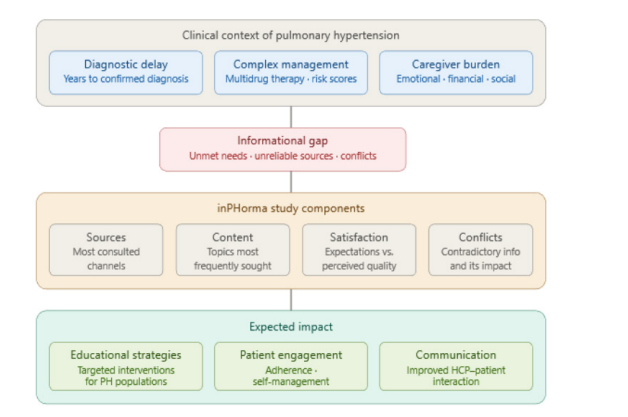
Figure 1:Conceptual framework of health information-seeking behavior in pulmonary hypertension. Conceptual model illustrating the relationships between information sources, content sought, patient and caregiver experiences (including conflicting information), and preferred communication channels in the context of pulmonary hypertension.
Objectives
Primary objective
To map the main information sources, information-seeking patterns, expectations, satisfaction levels, and communication channels utilized by patients with confirmed pulmonary hypertension diagnoses and their informal caregivers.
Secondary objectives
(1) To identify the information sources most frequently consulted; (2) to describe the content most commonly sought; (3) to evaluate expectations and satisfaction with information received; (4) to assess the frequency and impact of conflicting health information; and (5) to identify communication channels perceived as most reliable by this population.
Methods
Study design
This is an observational, cross-sectional study using a structured self-administered questionnaire. No hypothesis testing is planned; the study is exploratory and aims to generate hypotheses rather than confirm them.
Setting
The study will be conducted at the Pulmonary Circulation Unit of the Instituto do Coração (InCor), Hospital das Clínicas, Faculdade de Medicina da Universidade de São Paulo, a nationally recognized tertiary referral center for pulmonary hypertension in Brazil.
Target Population
Two participant groups will be enrolled:
Patients: adults (≥ 18 years) with a confirmed diagnosis of pulmonary hypertension of any clinical group, under regular follow-up at InCor.
Informal caregivers: adults (≥ 18 years) who provide informal (non-professional) care or accompaniment to a patient with PH, including family members or other non-professional caretakers.
Eligibility Criteria
Inclusion criteria:
Age ≥ 18 years.
Confirmed diagnosis of PH (patients) or informal caregiver status for a person with PH (caregivers).
Ability to read and understand the questionnaire independently
Provision of written informed consent (TCLE).
Exclusion criteria:
Cognitive or functional impairment preventing adequate questionnaire completion.
Refusal to participate or failure to provide written informed consent
Sampling
Participants will be recruited by convenience sampling during routine outpatient clinic visits. The target sample is 100 participants: 50 patients and 50 informal caregivers. Given the exploratory and descriptive nature of the study, no formal sample size calculation was performed. The target sample of 100 participants is consistent with similar survey-based studies in pulmonary hypertension and chronic diseases, and is considered sufficient to provide stable descriptive estimates and support hypothesis generation. The recruitment and inclusion process is summarized in Figure 2.
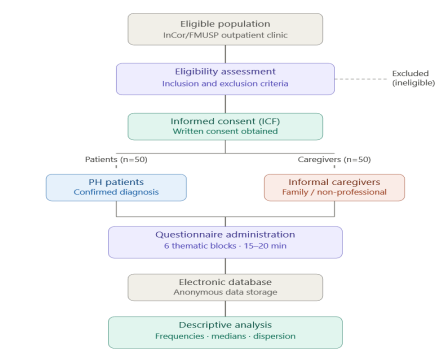
Figure 2:Participant recruitment and inclusion flowchart. Flow diagram illustrating the identification, eligibility assessment, and inclusion of patients with pulmonary hypertension and informal caregivers in the inPHorma study
Study Instrument
Data will be collected using a structured self-administered questionnaire developed specifically for this study. The instrument is organized into six thematic blocks, as described in Table 1. A visual representation of the questionnaire structure is provided in Figure 3. Estimated completion time is 15 to 20 minutes.
Table 1. Structure and content of the inPHorma questionnaire.
| Block | Theme | Items |
|---|---|---|
| 1 | Sociodemographic and clinical data | Role (patient/caregiver); age; sex; educational attainment; state and city of residence; time since PH diagnosis or caregiver role; internet access. |
| 2 | Information sources | Sources consulted (multiple choice: physician, other health professionals, institutional health websites, general websites, social media, patient groups, family/friends, other); search frequency. |
| 3 | Expectations and satisfaction | Confidence in finding needed information (5-point Likert scale); satisfaction with information found (5-point Likert scale); report of unmet informational needs. |
| 4 | Content sought | Most frequently sought topics (up to 3 choices): available treatments; medication side effects; disease prognosis; social rights and benefits; emerging therapies; symptoms and disease progression; daily care and quality of life; other. |
| 5 | Experience with conflicting information | Whether conflicting information was encountered; topic involved; whether it generated doubt or led to changes in treatment or care behaviors. |
| 6 | Preferred channels | Single most trusted channel (single choice); preferred content format (text, video, audio/podcast, in-person, other). |
The questionnaire was developed based on a review of the literature on health information-seeking behavior and patient education in chronic diseases. Content validity was assessed by the research team, including clinicians with expertise in pulmonary hypertension. Given the exploratory nature of the study, no formal validation or pilot testing was performed.
The questionnaire is provided in full as a supplementary file (Figure 3).
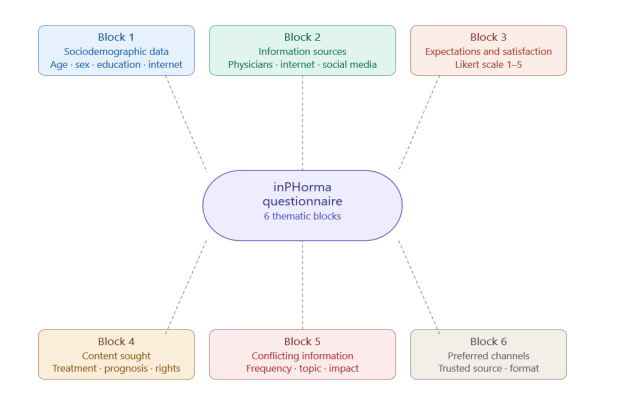
Figure 3:Structure of the inPHorma questionnaire. Graphical representation of the six thematic blocks included in the structured questionnaire, covering sociodemographic data, information sources, expectations and satisfaction, content sought, experience with conflicting information, and preferred communication channels.
Data Collection Procedures
Questionnaires will be distributed to eligible participants during scheduled outpatient visits. Participants will complete the instrument individually, without assistance from healthcare professionals or study staff, to minimize response bias. Study staff will be available to clarify procedural questions if needed. Completed questionnaires will be collected anonymously; no personal identifiers will be recorded on the instrument.
Data Management
Data will be transferred to an electronic database after collection. As no identifiable personal data will be recorded, all data will be handled in accordance with applicable Brazilian data protection legislation. All records will be stored securely and access will be restricted to authorized members of the research team.
Statistical Analysis
Analysis will be descriptive. Categorical variables will be summarized as absolute and relative frequencies. Continuous variables will be described as means and standard deviations or medians and interquartile ranges, according to their distribution.
Likert-scale responses will be described as frequencies per scale level. Confidence intervals may be presented when informative, without formal inferential interpretation. No hypothesis testing or inferential models are planned. Results will be presented using tables and figures to summarize information-seeking patterns and information source preferences
Ethical Considerations
The study is approved by the institutional Research Ethics Committee (CAPPesq; approval number 7.939.103) and registered at ClinicalTrials.gov (NCT07207525). All procedures are conducted in accordance with the Declaration of Helsinki and applicable national regulations. Written informed consent is obtained from all participants. Data are collected anonymously and handled in compliance with Brazilian data protection legislation. Participation is voluntary, and participants may withdraw at any time without affecting their clinical care.
Potential risks are minimal and limited to possible emotional discomfort when discussing experiences related to PH. No direct individual benefit is anticipated. Study results may provide indirect benefits to participants and the broader PH community by informing the development of improved educational materials and communication strategies.
Timeline
The overall study timeline is summarized in Table 2
Table 2. Estimated study timeline.
| Phase | Estimated duration |
|---|---|
| Ethics committee approval | Approved on 31-Oct-2025 (Opinion No. 7.939.103) |
| Participant recruitment and data collection | 12 months |
| Data analysis | 3 months (following data collection) |
| Manuscript preparation | 3 months (following analysis) |
| Total | Approximately 18 months |
The study has been approved by the Research Ethics Committee and registered at ClinicalTrials.gov (NCT07207525). Recruitment will begin following institutional authorization.
Budget
No additional costs to the institution are anticipated. All planned activities will be conducted using the physical infrastructure and human and material resources already available at InCor/FMUSP. Enrolled patients will follow standard clinical care routines
Discussion
The inPHorma study addresses a relevant and underexplored topic in PH research. While the management of PH has advanced considerably over recent decades, the informational needs of patients and caregivers, and their access to reliable, adequate health information, remain poorly characterized.
Understanding where patients and caregivers seek information, what content they prioritize, and how satisfied they are with available information may have practical implications for clinical practice. Evidence from other chronic diseases suggests that informational adequacy is associated with disease management behavior, treatment adherence, and patient empowerment [5]. In PH, inadequate information has been identified as a contributor to caregiver burden and patient anxiety [6,7].
The complexity of pulmonary hypertension extends beyond clinical classification and includes biological, genetic, and research-related dimensions that may influence how patients and caregivers access and interpret health information. In clinical practice, patients are often exposed to heterogeneous and sometimes difficult-to-interpret concepts, such as risk stratification,prognosis, and the need for combination therapies, which may not be consistently explained across different sources. Factors associated with prognosis beyond traditional parameters have been described [12], while genetic aspects such as incomplete penetrance in heritable forms may complicate risk perception [13]. For example, the presence of a pathogenic variant does not necessarily imply disease development, which may generate uncertainty among patients and families. In addition, the rapidly evolving landscape of clinical research in pulmonary hypertension contributes to an increasing volume and complexity of available information [14], often leading patients to encounter new or conflicting information regarding emerging therapies and disease management strategies.
The heterogeneity of PH, spanning multiple clinical groups with distinct etiologies, prognoses, and treatment approaches, may also generate specific informational needs that differ across patient subgroups. The inPHorma study does not restrict eligibility by PH group, enabling an exploratory characterization across the full clinical spectrum encountered in a referral center.
The use of a self-administered structured questionnaire is consistent with the exploratory nature of this study and is aligned with established methods for cross-sectional surveys in chronic disease populations [7]. The anonymous format may support more candid reporting, particularly regarding the use of non-institutional information sources such as social media or general web searches.
Potential limitations of this study include its single-center design, convenience sampling approach, and restriction to participants capable of reading and completing the questionnaire independently. Findings may not be generalizable to populations with lower educational attainment or limited health literacy. The cross-sectional design also precludes causal inference. Nonetheless, the study is intended as an exploratory and hypothesis-generating investigation, and findings may inform the design of future studies, the development of targeted educational strategies within referral centers, and improvements in communication pathways across different levels of care.
Conclusion
The inPHorma study will provide a systematic characterization of information-seeking behaviors and communication preferences among patients with pulmonary hypertension and their informal caregivers. Findings may inform the development of targeted educational and support strategies, with potential implications for patient engagement, communication with healthcare providers, and disease management.
Abbreviations
HP: hipertensão pulmonar (pulmonary hypertension); PH: pulmonary hypertension; PAH: pulmonary arterial hypertension; PH-COPD: pulmonary hypertension associated with chronic obstructive pulmonary disease; InCor: Instituto do Coração (Heart Institute); FMUSP: Faculdade de Medicina da Universidade de São Paulo (School of Medicine, University of São Paulo); CEP: Comitê de Ética em Pesquisa (Research Ethics Committee); TCLE: Termo de Consentimento Livre e Esclarecido (Free and Informed Consent Form); CNS: Conselho Nacional de Saúde (Brazilian National Health Council).
Acknowledgements
The authors acknowledge the staff of the Pulmonary Circulation Unit at InCor/FMUSP for their support of this initiative.
Conflicts of Interest
The authors declare no conflicts of interest relevant to this study
Funding
This study received no external funding. All activities will be conducted using institutional resources.
References
1. Simonneau G, Montani D, Celermajer DS, Denton CP, Gatzoulis MA, Krowka M, et al. Haemodynamic definitions and updated clinical classification of pulmonary hypertension. Eur Respir J. 2019;53(1):1801913.
2. Armstrong I, Billings C, Kiely DG, et al. The patient experience of pulmonary hypertension: a large cross-sectional study of UK patients. BMC Pulm Med. 2019;19(1):67.
3. Rees D, Armstrong I, Billings C, et al. Living with PH—unique insights from an international ethnographic study. Pulm Circ. 2015;5(3):529-537.
4. Scabello R, Carvalho-Pinto RM, Parodi LN, Almeida G, Nascimento I, Rios CC, Fernandes CJCS. Prevalence, pathogenesis and clinical impact of pulmonary hypertension associated with chronic obstructive pulmonary disease (PH-COPD). Front Cardiovasc Med. 2026. doi:10.3389/fcvm.2026.1700063.
5. Söderberg S, et al. Information experiences and needs in patients with pulmonary arterial hypertension and chronic thromboembolic pulmonary hypertension. J Cardiovasc Nurs. 2016;31(3):238-245.
6. Verma S, Sayal A, Vijayan VK, et al. Caregiver's burden in pulmonary arterial hypertension: a clinical review. J Exerc Rehabil. 2016;12(5):386-392.
7. Rådegran G, et al. Perceptions of received information, social support, and coping in patients with pulmonary arterial hypertension or chronic thromboembolic pulmonary hypertension. J Cardiovasc Nurs. 2017;32(2):140-147.
8. Báez Gutiérrez N, Rodríguez Ramallo H, Mendoza-Zambrano EM, et al. Smartphone apps for pulmonary hypertension: systematic search and content evaluation. JMIR Mhealth Uhealth. 2024;12:e57289.
9. Giraud L, et al. A systematic evaluation of the quality, accuracy, and reliability of internet websites about pulmonary hypertension. Pulm Circ. 2017;7(3):685-692.
10. Giraud L, et al. Participation in pulmonary hypertension support group improves patient-reported health quality outcomes: a patient and caregiver survey. Pulm Circ. 2019;9(1):2045894018819860.
11. Hwang B, et al. Health information-seeking behaviors of family caregivers: analysis of the Health Information National Trends Survey. J Med Internet Res. 2013;15(10):e225.
12. Fernandes CJCS, Nascimento IAO, Oliveira T, Jardim CVP, Hoette S, Souza R. Prognostic role of platelets in pulmonary arterial hypertension. Pulm Circ. 2025;15(4):e70180. doi:10.1002/pul2.70180.
13. Nascimento I, Iadocicco N, Fernandes C. Penetrância incompleta na genética humana: a hipertensão arterial pulmonar como exemplo clínico. Genética na Escola. 2026;21(1):1-6. doi:10.55838/1980-3540.ge.2026.679.
14. Nascimento IAO, Souza R, Fernandes CJCS. 2025 Annual review of pulmonary arterial hypertension clinical research. Pulm Ther. 2026. doi:10.1007/s41030-026-00359-w.
Received:February 25, 2026;
Accepted: March 17, 2026;
Published: March 22, 2026.
To cite this article : Nascimento I, Fernandes CJCS. inPHorma Study Protocol: Information Sources and Health-Seeking Behaviors in Patients with Pulmonary Hypertension and Their Caregivers. Eur J Respir Med. 2026; 8(1): 506- 511. doi: 10.31488/ EJRM.158.
© The Author(s) 2026. This is an open access article distributed under the terms of the Creative Commons Attribution License (https://creativecommons.org/licenses/by/4.0/).